|
|
 of entertainment retailing  |
|
           |
The following are extracts from the BARD yearbook
Market Trends Peter Scaping Record Industry Research Consultant Record retailing is probably the subject of more extensive market research than any other retail sector. On a daily basis, the chart research (which is described elsewhere in the yearbook) captures details of about 90% of all sales of recorded music in the UK. The input of BARD members underpins this exercise whic is commissioned from Milward Brown in partnership with the record companies' trade association BPI (British Phonographic Industry). The BPI also provides a wealth of market information in its Statistical Handbook and other publications. This is supplemented by agencies such as Taylor Nelson Sofres and the specialist company Media Research Publishing. All of these organisations have contributed to the statistical overview on the following information. Trade Deliveries The sales information provided by retailers to Milward Brown produces a reliable index of consumer activity, but the BPI's series of trade delivery statistics gives a broader picture of industry output which allows comparison with other countries. In 2001 the value of recorded music shipments to the trade grew by more than 5% - a much better performance than in most major markets. Significant movements within this overall figure included strong growth in CDs (+8%), further rapid contraction is cassette sales (down 60%) and a decline of 10% in the singles market, now at its lowest level since 1993.
Retail Sales
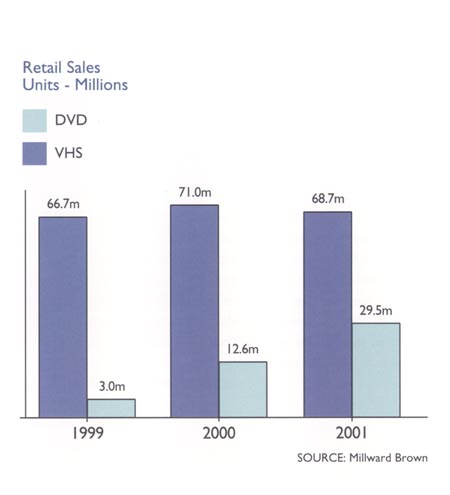
With average prices falling across the board and CDs commonly selling for under £10, it was something of an achievement for the retail music market to post an increase in value in 2001. Sales rose by over 2%, more or less in line with inflation. Revenue from CD albums grew by more than £100m, but this success was considerably eroded by the collapse in cassette sales and the declining singles market. The table above deals with conventional sound carriers, but record retailers can expect an increasing contribution from music DVDs - this sector was estimated to have been worth about £20m last year.
The number of record shops and other outlets selling CDs, vinyl, DVDs and other music recordings has been fairly stable in recent years, although there has been a detecable decline in the number of independents. Some multiples and supermarkets have withdrawn from the market, only to be replaced by others. Access for record buyers has thereby remained consistent. Full-range retailers have been resilient in the face of stiff competition from supermarkets which for the most part predominantly stock fast moving chart material.
home page | about | structure | News & Issues | offers | events | membership | conduct | links | contact | ||||||||||||||||||||||||||||||||||||||||||||||||||||||||||||||||||||||||||||||||||||||||||||||||||||||||||||||||||||||||||||||||||||||||||||||||||||||||||||||||||||||||||||||||||||||||||||||||||||||||||||||||||||||||